Tips
Deck Substructure Wood: How to Choose Timber That Supports Long-Lasting Decking Boards
When planning a deck, most of the attention usually goes to the visible surface. However, long-term durability does not start with the boards, but with the structure underneath. Even high-quality decking boards will not perform as expected if the substructure is unstable or poorly selected. This is why choosing the right timber for the frame is one of the most important steps in the entire project.
Outdoor decks are constantly exposed to moisture, temperature changes and mechanical load. Because of this, the substructure must remain stable over time and resist deformation. If you are considering decking boards, it is essential to think about what supports them and how that structure will behave over the years.
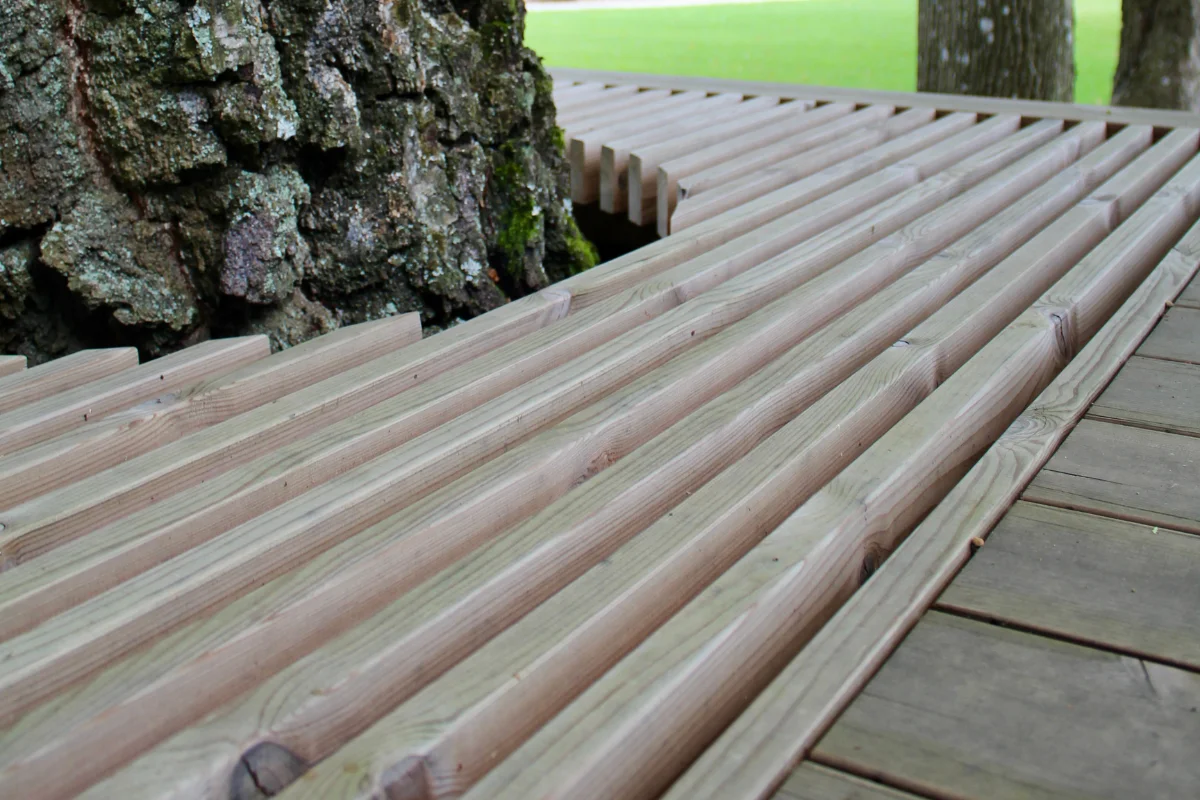
Why the substructure is critical for deck performance
The substructure forms the foundation of the entire deck. It distributes load and ensures that the surface remains even and secure. If the supporting timber begins to move, twist or settle unevenly, these changes will quickly become visible on the surface.
Over time, this can lead to gaps, uneven boards or a less stable walking surface. For this reason, the substructure should never be treated as a secondary element. It directly affects how long the decking boards will maintain both their appearance and performance.
What type of wood to choose for the frame
The most important qualities for substructure timber are stability and resistance to moisture. Untreated wood tends to absorb water, which causes expansion and contraction. This movement often leads to long-term structural issues.
Thermally treated wood offers a more stable alternative. Its internal structure has been modified, which reduces moisture absorption and limits dimensional changes. As a result, the frame remains more consistent, even in challenging outdoor conditions.
Choosing the right timber from the beginning helps prevent problems that would otherwise only appear after several seasons of use.
Moisture impact and the role of ventilation
Moisture is one of the main factors that affects the lifespan of a deck structure. Even durable materials can degrade faster if water accumulates or airflow is limited. Proper design plays a key role in preventing this.
Ensuring sufficient space between the substructure and the ground allows air to circulate and helps the timber dry more effectively. Good ventilation reduces the risk of long-term moisture exposure and helps maintain the stability of the entire construction.
Structural stability and installation quality
Material choice alone is not enough to guarantee durability. Installation quality has a direct impact on how the structure performs over time. The spacing between beams, their alignment and fastening methods all influence the final result.
If spacing is too wide or inconsistent, the decking boards may begin to move or flex. An uneven frame can also create unnecessary stress within the structure. Careful planning and precise installation help ensure that the deck remains stable and visually consistent.
What ensures long-term performance
A long-lasting deck is the result of several factors working together. The substructure must be stable, the construction properly ventilated and the installation carried out with attention to detail.
When these elements are aligned, decking boards maintain their shape, the surface remains even and the deck continues to perform well over time. Without this balance, even high-quality materials may not deliver the expected results.
What to consider before starting your project
When planning a deck, it is important to see the structure as a complete system rather than separate elements. The substructure and the surface must work together, which is why material compatibility and proper design should be considered from the start.
If you want your decking boards to last for many years, it is worth investing in a reliable foundation. The ESSPO Wood team can help you select the most suitable solution for both the substructure and the deck surface, based on your project conditions and expected use.