Tips
Horizontal or Vertical Interior Wood Cladding: How Does It Change the Sense of Space?
Wood cladding can change how spacious a room feels without altering its actual dimensions. Vertical lines tend to emphasise height, while horizontal boards draw attention to the width of a wall. However, the final effect also depends on the cladding profile, colour, lighting and how much of the wall is covered.
When choosing interior wood cladding, start by considering what you want to achieve. Are you trying to make a low ceiling appear higher, give a narrow room a wider feel or define a particular area? The answer can help determine the most suitable installation direction.
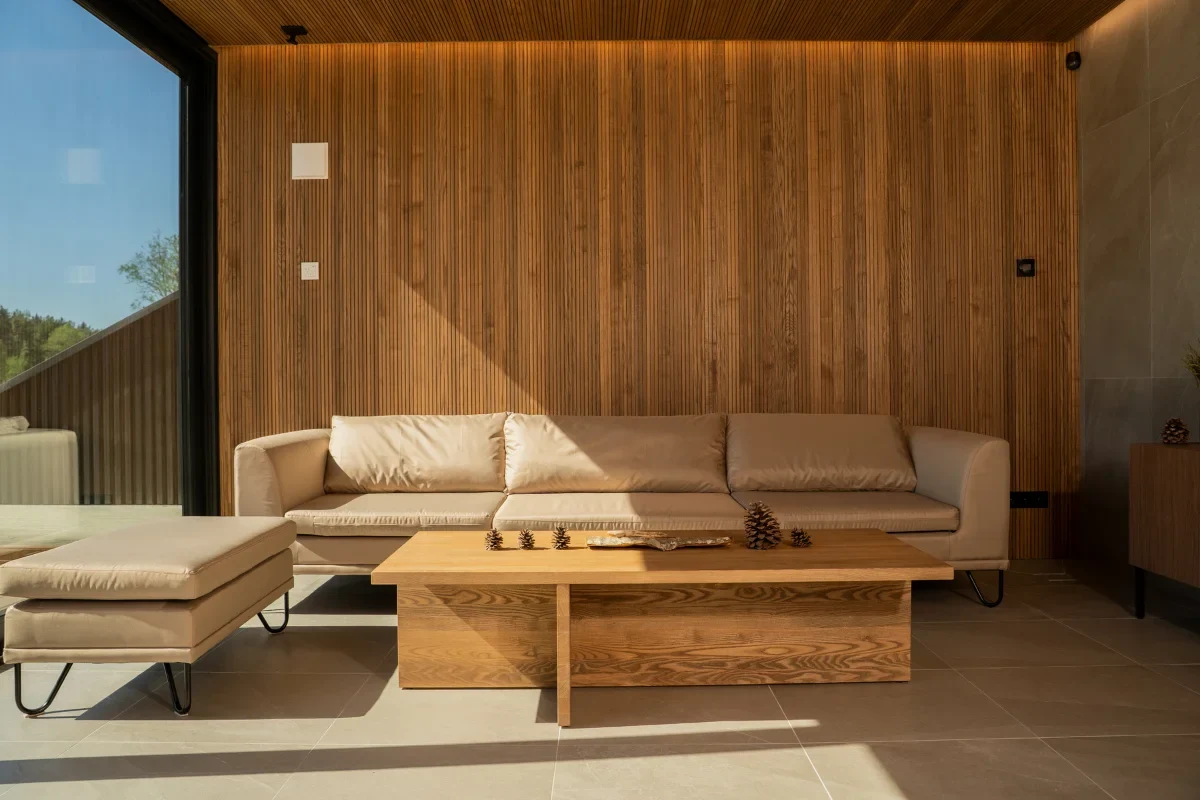
Vertical Wood Cladding: Creating a Sense of Height
Vertically installed wooden boards create lines that guide the eye from the floor towards the ceiling. This can make walls appear taller, particularly when the cladding extends across their full height.
Vertical cladding works well in hallways, bedrooms and living rooms where a particular wall needs emphasis. For example, a vertically clad wall behind a bed can visually increase the sense of height while creating a distinct feature within the bedroom.
In smaller rooms, however, very narrow boards with deep grooves should be used carefully. Too many pronounced vertical lines can make the surface appear visually busy. Wider boards with a subtler profile may create a calmer result.
Horizontal Wood Cladding: Making a Room Feel Wider
Horizontal cladding emphasises the length of a wall, potentially making a narrow room feel more spacious. Its lines work naturally with long shelves, low furniture and wide windows.
In a living room, horizontal wood cladding can visually connect the television area with the seating space, creating a consistent appearance across the wall. This approach is particularly effective when a restrained, continuous pattern is preferred.
However, strongly defined horizontal lines can sometimes emphasise low ceilings. In such spaces, lighter wood tones, shallower profiles or cladding applied to only part of the wall may provide a better balance.
Can You Combine Both Directions in a Small Room?
Horizontal and vertical wood cladding can be combined within the same home, although using both directions in a small room requires careful planning.
For example, vertical boards can highlight a home office corner while the remaining walls have a smooth finish. This creates a clear visual boundary without introducing a physical partition.
The direction of the boards should also work with flooring, furniture and other prominent interior features. When too many competing lines appear in one space, the overall design can lose its sense of consistency.
How Do Cladding Profiles and Lighting Affect the Room?
Even boards installed in the same direction can create noticeably different effects depending on their profile.
Flat or subtly profiled wood cladding produces a more understated surface, while deeper 3D profiles introduce texture and stronger shadow lines. These details become particularly noticeable when natural or artificial light falls across the wall from the side.
In a smaller room, a deeply grooved profile can make the wall feel visually heavier. Before ordering, it is worth viewing a sample in daylight and under evening lighting. The appearance of the same timber surface can change considerably depending on the direction and intensity of the light.
How Do Wood Colour and Species Influence the Result?
Lighter interior wood cladding generally helps maintain a bright, open appearance. Darker timber creates stronger visual depth and can make a particular wall stand out, although it may feel more dominant in compact interiors.
ESSPO Wood offers thermally modified pine, spruce and ash products, each with its own grain and visual character. Pine usually has a more pronounced softwood pattern, spruce offers a relatively subtle appearance, and ash features distinctive natural grain lines.
The chosen wood tone should also complement flooring, furniture and other large surfaces. The same cladding can look quite different in a bright minimalist interior compared with a room furnished in darker colours.
Which Cladding Direction Should You Choose?
If the goal is to emphasise ceiling height, vertical wood cladding is often the better option. If you want to highlight the width of a wall, horizontal installation may be more suitable.
Neither direction is universally better. Room proportions, lighting, board width, profile depth and timber colour all influence the final appearance. Considering these elements together helps create an interior where the wooden finish complements the space rather than competing with it.
Not sure which interior wood cladding would work best in your space?
Contact ESSPO Wood. We can help you choose the right wood species, cladding profile and installation direction based on your room’s proportions, lighting conditions and the atmosphere you want to create.