Tips
Terrace Calculator: What Parameters Should You Evaluate?
When planning a terrace, aesthetic ideas alone are usually not enough. To accurately estimate the required amount of materials, structural solutions, and the overall project budget, it is important to calculate the key parameters in advance. For this reason, terrace calculators are becoming increasingly popular, helping homeowners and builders better understand the scope of a future project and avoid planning mistakes.
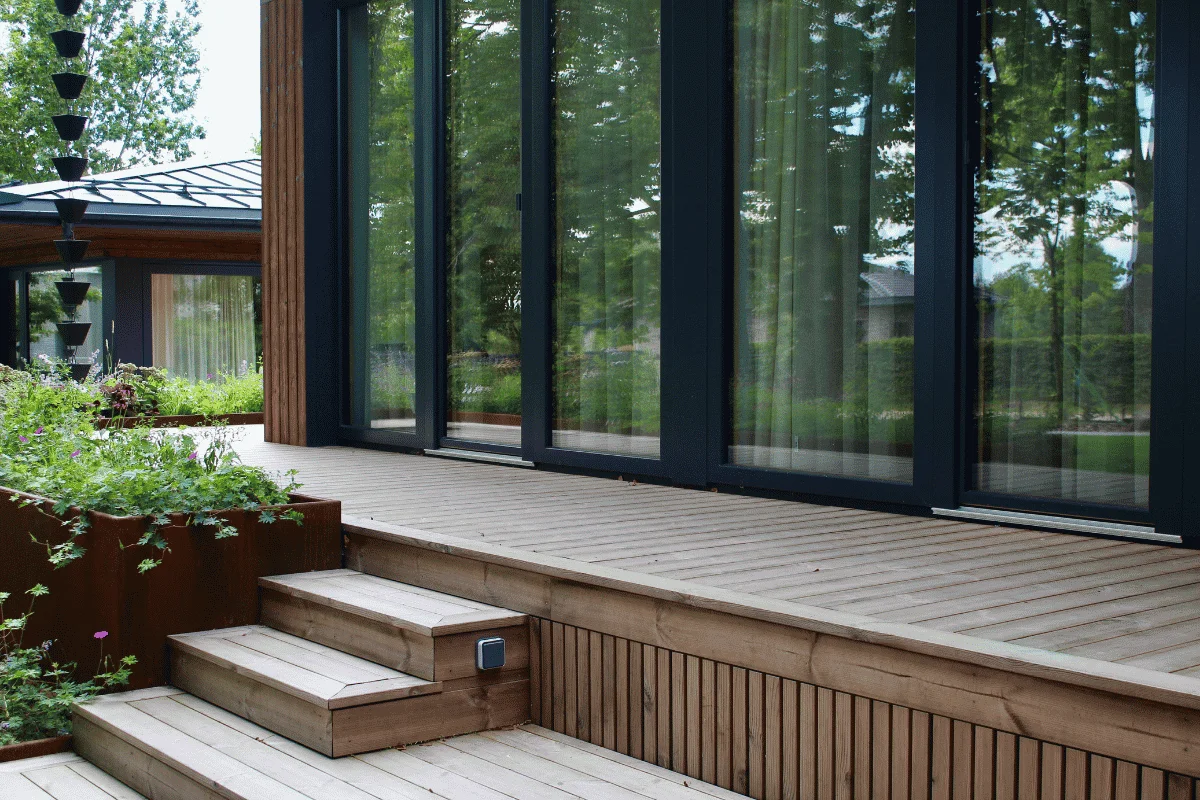
The durability of a terrace depends not only on installation quality but also on properly selected materials. More and more projects today use thermally modified wood cladding, valued for its stability, lower moisture absorption, and longer service life in outdoor conditions.
Why Is Accurate Terrace Planning Important?
A terrace project begins not with the selection of boards, but with accurate calculations. Even small miscalculations can affect not only the amount of materials required but also the structural stability and installation quality.
Correctly calculating the terrace area allows for more accurate estimation of cladding quantities, substructure requirements, and additional materials. This helps avoid unnecessary costs and reduces the risk of running out of materials during installation or having to adjust the project later.
A terrace calculator also makes it easier to compare different material solutions and evaluate their suitability for specific project requirements.
Which Parameters Should Be Evaluated?
One of the most important parameters is the total terrace area. This affects not only the amount of cladding needed but also the design of the supporting structure. It is equally important to evaluate the shape of the terrace, as non-standard layouts often require more cutting and a larger material reserve.
Another important aspect is the direction of the boards and the spacing between them. Installation direction influences both the visual appearance and the total material requirement. Proper spacing between boards is necessary for natural wood movement and effective water drainage.
The substructure design must also be considered. The layout and spacing of structural battens depend on the selected wood species, board thickness, and expected terrace loads.
Environmental conditions are another key factor. Open terraces constantly exposed to sunlight and precipitation require more stable and moisture-resistant materials than partially covered structures.
Why Is Thermally Modified Wood Commonly Chosen for Terraces?
Outdoor wood is constantly exposed to moisture, temperature fluctuations, and UV radiation. For this reason, wood stability plays a major role in the long-term durability of a terrace.
Thermally modified wood is produced using high temperatures and steam without chemical additives. During this process, the hygroscopic properties of the wood are reduced, meaning it absorbs less moisture and becomes more dimensionally stable.
Because of these properties, thermally modified wood cladding is often selected for terraces, façades, and other outdoor structures. This type of wood is less prone to deformation, cracks less frequently, and maintains its aesthetic appearance for longer even in demanding climate conditions.
ESSPO Wood offers thermally modified pine, spruce, and ash. Thermally modified pine and spruce are commonly chosen because of their excellent balance between durability and price, while thermally modified ash is valued in projects where higher density and more distinctive aesthetics are required.
How Does a Terrace Calculator Help Avoid Mistakes?
One of the most common mistakes in terrace planning is incorrectly estimating material quantities. Insufficient cladding or structural reserves may complicate installation, while excessive quantities lead to unnecessary expenses.
A terrace calculator helps accurately estimate not only cladding coverage but also additional elements such as structural battens, fastening systems, installation direction, and potential cutting waste.
This is especially important in more complex projects involving non-standard terrace dimensions or combined installation patterns.
Which Wood Should Be Chosen for a Terrace?
When choosing wood, it is important to evaluate not only appearance but also performance characteristics. Outdoor terrace materials must withstand moisture, deformation, and temperature fluctuations.
Thermally modified pine is considered a versatile solution because of its natural wood appearance and reliable stability. Thermally modified spruce is often selected for lighter, minimalist projects. Meanwhile, thermally modified ash is valued for its strength and expressive grain pattern, making it popular in higher-end architectural projects.
Proper maintenance is also important. Although thermally modified wood is more stable than untreated timber, periodic oiling helps preserve the natural tone of the wood for a longer period.
Better Planning Means a Longer-Lasting Terrace
A properly planned terrace helps avoid many installation and maintenance problems in the future. A terrace calculator allows for more accurate estimation of material requirements, structural solutions, and the overall scope of the project, while properly selected thermally modified wood ensures structural stability and long-term durability.
Natural wood aesthetics, resistance to environmental impact, and reduced deformation risk make thermally modified timber one of the most reliable solutions for modern outdoor terraces. If you are planning a terrace project and want to choose the most suitable solution, consulting specialists during the planning stage is always worthwhile.
Planning a Terrace and Looking for the Right Solution?
We will help calculate the required amount of materials and select the most suitable thermally modified wood cladding for your terrace project. Contact ESSPO Wood specialists and discover a durable solution for your outdoor space.