Tips
Why Does Your Deck Creak? Common Causes and Solutions
A creaking deck is usually caused by movement between decking boards, loose fixings or an unstable substructure. When someone walks across the surface, timber components may rub against each other or their fixings, producing a squeaking or creaking sound. Sometimes the problem can be solved by securing a few boards, while more serious cases may require repairs to the supporting structure.
Even high-quality decking boards can develop creaking noises if they are installed incorrectly. Before attempting repairs, it is important to identify where the sound originates and what causes the movement.
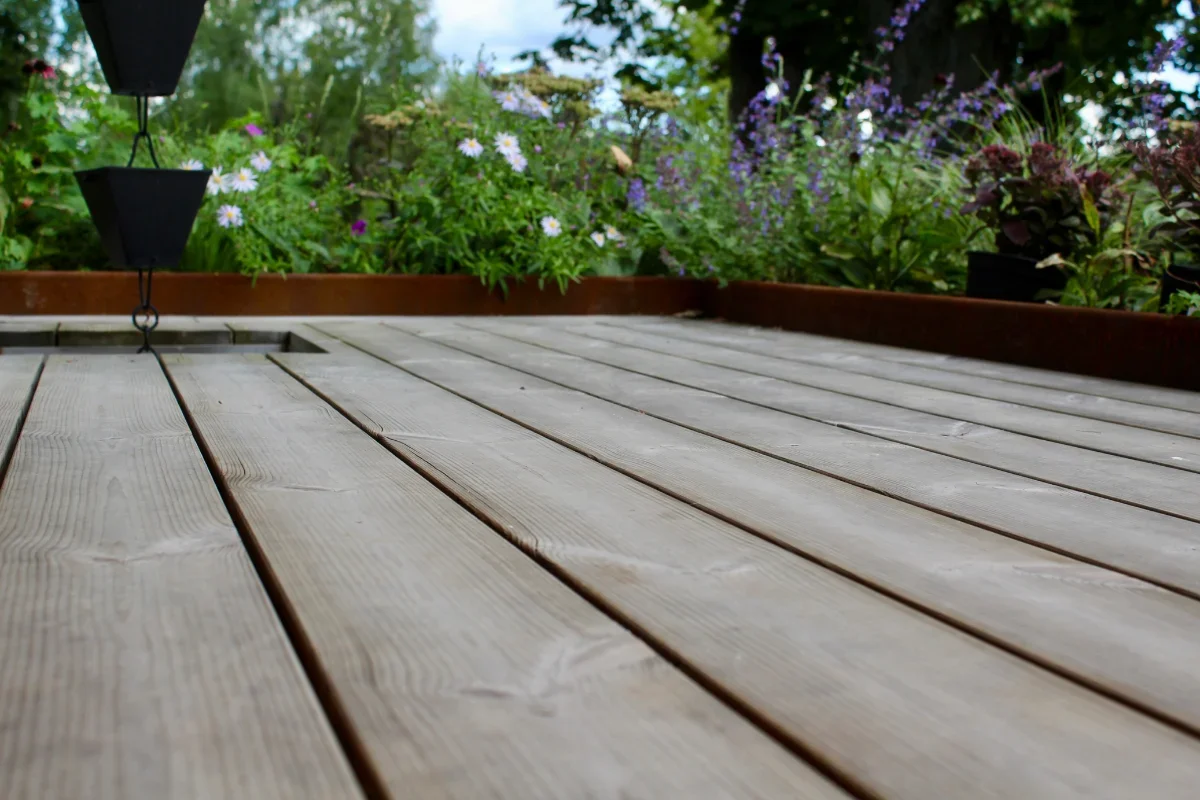
Why Do Wooden Decking Boards Start Creaking?
The most common cause of deck creaking is movement and friction between structural components. When a board bends slightly underfoot or moves around its fixings, it can produce noise, particularly when someone repeatedly steps on the same area.
Creaking may become more noticeable after rainfall or significant temperature changes. Wood responds to environmental moisture, causing small dimensional changes that can increase contact between boards or joints.
However, persistent creaking should not be considered an unavoidable characteristic of wooden decking. In many cases, it indicates a problem with the fixings or supporting structure.
Loose Screws and Incorrect Decking Fixings
Loose or unsuitable fixings are among the most common causes of a squeaky deck. If a screw becomes loose or a fixing does not hold the board securely against its support, the board may move when someone walks over it.
Start by inspecting the affected fixing points. Damaged screws or unsuitable fasteners may need replacing with products recommended for the decking system.
Avoid simply adding more screws without checking the installation requirements. Incorrect screw placement can weaken a board or cause splitting, particularly with thermally modified timber.
Can an Unstable Deck Substructure Cause Creaking?
Sometimes the noise comes from underneath the decking rather than from the boards themselves. Moving joists, loose structural connections or unstable supports can all produce creaking sounds.
If the spacing between joists is too wide for the selected board thickness, the decking may bend excessively underfoot. Over time, this movement can also affect the fixings.
Uneven supports and poorly connected framing elements can create similar problems. If the deck creaks across a larger area or feels unstable when walked on, the entire substructure should be inspected.
Can Insufficient Gaps Between Boards Cause Noise?
Wooden decking requires suitable spacing between boards to allow water drainage and accommodate natural dimensional changes.
If boards are installed too closely together, increased moisture may cause their edges to touch. Friction between neighbouring boards can then produce noise when someone walks across the surface.
Thermally modified wood offers improved dimensional stability compared with untreated timber, but it still responds to environmental conditions. Following the manufacturer’s recommended spacing remains essential.
How Can You Identify Where the Creaking Comes From?
First, determine whether the noise occurs in one specific location or across a larger section of the deck.
If only one board creaks, inspect its fixings, support points and contact with neighbouring boards. A loose screw or insufficient support may be responsible.
If several areas produce noise, the problem may lie deeper within the substructure. Look for excessive board movement, uneven surfaces or loose structural connections.
Signs of decay, damaged joists or significant movement should be taken seriously. Avoid using an unstable deck until a qualified professional has assessed its condition.
When Is a Simple Repair Enough?
If the problem is caused by a loose fixing, securing or replacing the affected fastener may be sufficient. In some cases, the solution involves correcting contact between boards or replacing a damaged fixing component.
However, if the underlying cause is excessive joist spacing, unstable supports or moisture-damaged framing, replacing screws alone will not solve the problem.
More extensive repairs may involve adding supports, reinforcing structural connections or replacing damaged sections of the deck frame. The appropriate solution depends on the condition of the existing structure.
How Can You Prevent Your Deck From Creaking?
Preventing deck creaking starts with proper installation. The substructure must be stable, joist spacing should match the decking specifications, and all fixings must be compatible with the selected boards.
Adequate gaps, effective drainage and ventilation beneath the decking also help prevent problems associated with moisture accumulation.
Regular inspections can identify loose fixings or developing structural issues before they become more serious.
Ultimately, decking material and installation quality must be considered together. Even durable thermally modified decking boards cannot perform properly when installed over an unstable foundation.

Planning a new wooden deck or looking for suitable boards to renovate an existing one?
Contact ESSPO Wood. We can help you choose thermally modified decking boards, suitable profiles and installation solutions based on your deck structure, intended use and project requirements.